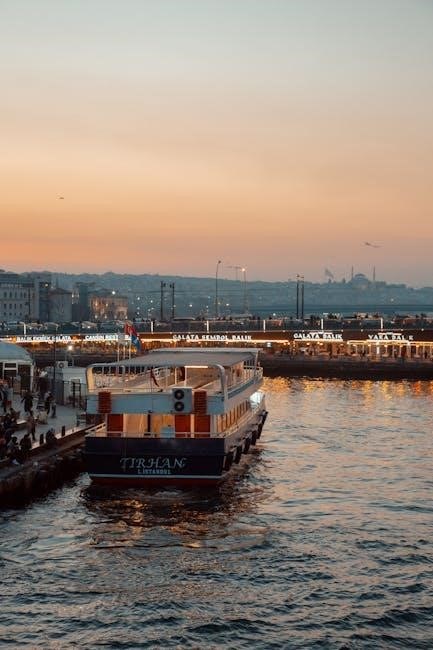
Navigational safety at sea heavily relies on clearly visible lights‚ especially during restricted visibility conditions.
These lights communicate a vessel’s size‚ type‚ and activity to other mariners‚ preventing collisions and ensuring safe passage.
Understanding these signals‚ often detailed in comprehensive PDF guides‚ is crucial for all seafarers and maritime professionals.
Properly interpreting and displaying navigation lights is a fundamental aspect of responsible seamanship‚ as outlined in international regulations.
Importance of Navigation Lights
Navigation lights are paramount for preventing collisions at sea‚ particularly during nighttime or periods of reduced visibility like fog or heavy precipitation. These lights act as a universal visual language‚ instantly conveying critical information about a vessel’s identity‚ size‚ and current activity to other mariners.
Without properly functioning and understood navigation lights‚ the risk of maritime accidents dramatically increases. PDF documents detailing the International Regulations for Preventing Collisions at Sea (COLREGS) are essential resources for understanding the specific light configurations required for different vessel types and situations.
These regulations‚ available from sources like the US Coast Guard and the IMO‚ ensure a standardized system that transcends language barriers. Correctly displaying and interpreting these lights isn’t merely a legal requirement; it’s a fundamental safety practice that safeguards lives and protects valuable maritime assets. Ignoring these guidelines can lead to severe consequences‚ including fines‚ legal liabilities‚ and‚ most importantly‚ tragic accidents.
Regulations Governing Navigation Lights (COLREGS)
The International Regulations for Preventing Collisions at Sea (COLREGS) are a comprehensive set of rules governing navigation‚ with a significant focus on lighting. These regulations‚ adopted internationally‚ dictate the specific characteristics‚ colors‚ and display configurations of navigation lights required for various vessel types and operational states.
Detailed PDF versions of COLREGS are readily available from maritime authorities worldwide‚ including the International Maritime Organization (IMO) and national coast guards. These documents outline precise requirements for sidelights‚ sternlights‚ masthead lights‚ and all-round lights‚ specifying visibility ranges and mounting heights.
Compliance with COLREGS is legally mandated for all vessels operating on the high seas. Understanding these rules‚ often found within downloadable PDF guides‚ is crucial for safe navigation and avoiding potential legal repercussions. Regular review of these regulations is recommended‚ as amendments are occasionally issued to enhance maritime safety.
Accessing COLREGS Documents (PDF Format)
Obtaining current COLREGS documentation in PDF format is straightforward‚ ensuring mariners have readily available access to vital navigational rules. The International Maritime Organization (IMO) provides official COLREGS publications as downloadable PDFs on their website‚ offering the most authoritative version.
National maritime authorities‚ such as the US Coast Guard‚ also offer COLREGS PDFs tailored to specific national interpretations and amendments. These resources often include supplementary guidance and explanatory notes. Links to these official PDF documents are typically found on their respective websites.
Numerous maritime training institutions and online resources compile and distribute COLREGS PDFs‚ but it’s crucial to verify the source’s credibility and ensure the document is up-to-date. Regularly checking for revisions is essential‚ as regulations can change. Always prioritize official sources for accurate information.
Types of Power-Driven Vessels and Their Lights
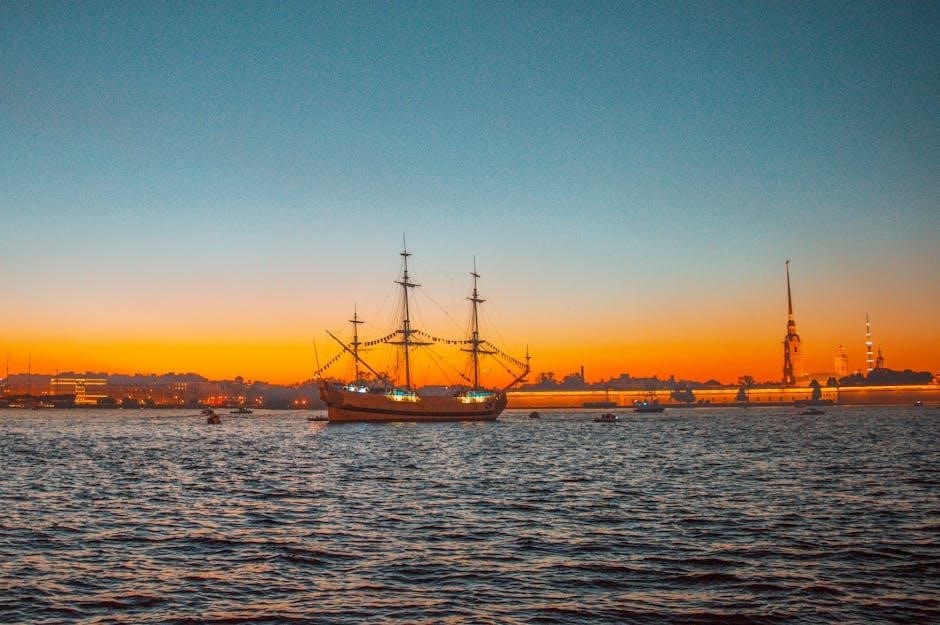
Power-driven vessels display specific lights‚ detailed in PDF COLREGS guides‚ indicating their underway status and maneuvering actions to prevent collisions at sea.
Lights for Vessels Underway
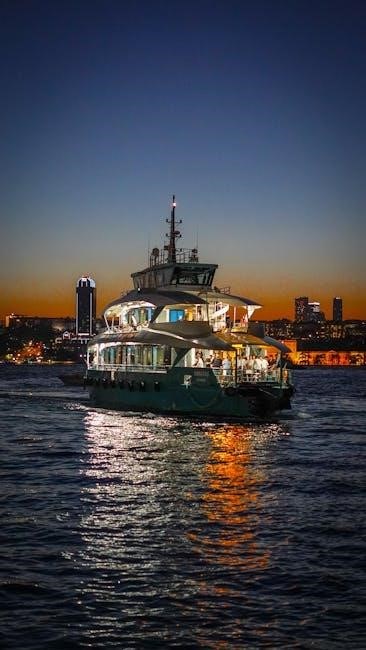
Vessels making way display a masthead light‚ visible over a wide arc‚ and sidelights – a red light on the port side and a green light on the starboard side. These configurations‚ thoroughly documented in PDF versions of the International Regulations for Preventing Collisions at Sea (COLREGS)‚ are essential for determining a vessel’s relative bearing and risk of collision.
Stern lights are also required on power-driven vessels not fishing‚ displayed in conjunction with the masthead and sidelights. Towing vessels have additional light requirements‚ often detailed in supplemental PDF guides from national maritime authorities‚ indicating the towed vessel and the nature of the tow. Understanding these specific light arrangements‚ readily available in downloadable PDF formats‚ is paramount for safe navigation and adherence to international maritime law. Proper display and recognition of these lights are fundamental to avoiding collisions and ensuring the safety of all vessels at sea.
Lights for Vessels Not Underway (Anchored‚ Aground)
A vessel at anchor displays an all-round white light‚ visible from all directions‚ indicating its stationary position. Detailed diagrams illustrating this configuration are readily available in PDF versions of COLREGS. A vessel aground exhibits two all-round red lights in a vertical line‚ a clear warning signal to other mariners‚ also comprehensively illustrated in downloadable PDF guides.
These lights are crucial for preventing collisions‚ particularly in congested waterways or during periods of reduced visibility. Supplementary PDF documents from organizations like the US Coast Guard often provide additional guidance on displaying these lights correctly. Understanding the nuances of these signals‚ easily accessible through PDF resources‚ is vital for safe navigation and adherence to international maritime regulations. Proper display and recognition of these lights are fundamental to avoiding grounding or collision.
Lights for Vessels Engaged in Fishing
Vessels actively fishing display specific lights to alert other ships to their operations. These typically include green and white all-round lights‚ or a single flashing white light‚ depending on the vessel’s size and fishing method. Detailed visual representations of these light configurations are commonly found within comprehensive PDF guides on navigation rules.
Understanding these signals is critical‚ as fishing vessels often maneuver unpredictably. PDF documents from the IMO and national maritime authorities provide detailed explanations and diagrams. These resources clarify the correct display of lights for different fishing operations‚ ensuring clear communication at sea. Accessing these PDFs is essential for all mariners to safely navigate around fishing grounds and avoid potential collisions. Proper interpretation‚ aided by PDF resources‚ is paramount for maritime safety.

Lights for Sailing Vessels
Sailing vessels exhibit red and green sidelights‚ plus a sternlight‚ as detailed in PDF navigation rulebooks.
These lights indicate the vessel’s heading and are crucial for collision avoidance at night.
Power-Driven Sailing Vessels
Power-driven sailing vessels present a unique lighting scenario‚ requiring a combination of lights dictated by the International Regulations for Preventing Collisions at Sea (COLREGS)‚ often available as a PDF download. When operating solely under power‚ these vessels must display the same lights as any other power-driven vessel – masthead light‚ sidelights (red and green)‚ and sternlight.
However‚ if the vessel is also utilizing sail‚ the situation becomes more complex. The regulations stipulate that if a vessel is making way under both sail and power‚ it must exhibit the lights appropriate for a vessel making way under sail – sidelights and a sternlight – in addition to the masthead light and sidelights required for a power-driven vessel. This combination clearly signals the vessel’s dual propulsion method to other mariners.
Understanding these nuances‚ readily accessible within detailed PDF guides from maritime authorities‚ is vital for safe navigation and compliance with international standards. Incorrectly displayed lights can lead to confusion and potentially dangerous situations at sea.
Sailing Vessels Under Sail

Sailing vessels under sail‚ a classic sight on the water‚ have specific navigation light requirements detailed in COLREGS documents‚ frequently found as comprehensive PDF guides. These vessels must display sidelights (red and green) and a sternlight. The sidelights indicate the vessel’s relative direction – red to starboard (right)‚ green to port (left) – while the sternlight shows the vessel’s aft.
These lights are crucial for determining a sailing vessel’s course and avoiding collisions‚ especially at night or in reduced visibility. It’s important to note that these lights are only required when making way under sail; when at anchor‚ different lights are displayed. Detailed diagrams illustrating correct light configurations are readily available within official PDF publications.
Properly understanding and displaying these lights is paramount for safe navigation and adherence to international maritime law. Mariners should regularly review the latest COLREGS PDF to ensure compliance and maintain situational awareness.
Sailing Vessels Towing
Sailing vessels engaged in towing present a more complex lighting scenario‚ thoroughly explained in COLREGS documentation often available as detailed PDF guides. They must exhibit the lights appropriate for their state – making way under sail and towing another vessel. This typically involves displaying sidelights‚ a sternlight‚ and a towing light.
The towing light is a yellow light‚ visible from all directions‚ indicating that a vessel is engaged in towing. The towed vessel’s lights depend on its own status; if underway‚ it displays appropriate underway lights‚ while at anchor‚ it shows anchor lights. Understanding these combinations‚ often visually represented in PDF charts‚ is vital.
Mariners should consult official COLREGS PDF resources to confirm the precise light configuration based on the specific towing situation‚ ensuring clear communication and preventing misunderstandings at sea. Safe towing relies on accurate light signaling.
Special Cases & Lights
Certain vessels require unique light configurations‚ detailed in comprehensive PDF guides outlining specific regulations.
These lights signal unusual operational states or hazards to other mariners effectively.
Lights for Vessels Constrained by Draught
Vessels constrained by their draught – meaning they are unable to deviate from a narrow channel due to their depth – exhibit specific lights to alert other ships. These lights‚ meticulously detailed in PDF versions of the International Regulations for Preventing Collisions at Sea (COLREGS)‚ are crucial for safe navigation.
A vessel constrained by draught displays three all-round red lights in a vertical line. This distinctive configuration immediately signals to approaching vessels that the displaying ship’s maneuvering options are severely limited. Other vessels must take extra caution and avoid impeding the constrained vessel’s passage. Understanding the precise placement and characteristics of these lights‚ as illustrated in official PDF documentation‚ is paramount for all mariners.
These lights aren’t merely a formality; they represent a critical safety measure‚ ensuring that vessels operating in confined waterways can navigate safely and predictably. Detailed PDF guides from maritime authorities provide comprehensive visual aids and explanations of these regulations.
Lights for Vessels Engaged in Mine Clearance
Vessels actively engaged in mine clearance operations require highly specific and recognizable lighting configurations‚ thoroughly documented in PDF versions of COLREGS and supplementary national regulations. These lights warn other vessels of the inherent dangers and the restricted maneuvering capabilities of mine-clearing ships.
A vessel engaged in mine clearance displays two all-round green lights in a vertical line‚ supplemented by a yellow light flashing in the same vertical line. This unique combination immediately identifies the vessel’s dangerous activity. Detailed PDF guides often include diagrams illustrating the precise positioning and characteristics of each light.
Other vessels are obligated to maintain a safe distance and exercise extreme caution when approaching a vessel displaying these lights. Accessing official PDF resources from organizations like the US Coast Guard or the IMO is vital for understanding these critical safety signals and ensuring compliance with international maritime law.
Lights for Pilot Vessels
Pilot vessels‚ crucial for safe navigation in harbors and waterways‚ exhibit distinct lighting arrangements to clearly signal their function to other ships. Detailed specifications are readily available in comprehensive PDF documents outlining the International Regulations for Preventing Collisions at Sea (COLREGS). These lights facilitate easy identification‚ especially during nighttime operations.
A pilot vessel displaying a pilot aboard will show two all-round white lights vertically aligned. When a pilot has embarked‚ these lights are supplemented with a flashing white light. These configurations are clearly illustrated within official PDF guides‚ ensuring correct interpretation by all mariners.
Understanding these signals‚ accessible through PDF downloads from maritime authorities‚ is paramount for safe vessel operation. Proper display and recognition of pilot vessel lights contribute significantly to preventing accidents and ensuring efficient port access.
Sound Signals & Their Relationship to Lights
Sound signals complement navigation lights‚ particularly in reduced visibility‚ as detailed in PDF COLREGS documents.
These audible warnings reinforce visual signals‚ enhancing overall maritime safety and situational awareness.
Fog Signals
Fog signals are crucial when visibility is restricted‚ supplementing navigation lights to prevent collisions. International Regulations for Preventing Collisions at Sea (COLREGS)‚ often available as PDF downloads‚ detail specific sound signal patterns for different vessels and situations.
Powered vessels underway make one prolonged blast every two minutes‚ while vessels not under command‚ vessels restricted in their ability to maneuver‚ vessels engaged in fishing‚ and vessels towing at anchor make one prolonged blast followed by one short blast every two minutes. Sailing vessels underway make one short blast every two minutes.
These signals‚ outlined in comprehensive PDF guides from organizations like the US Coast Guard and IMO‚ are vital for communicating a vessel’s presence and status when visual cues are limited. Understanding these patterns‚ and referencing the official PDF documentation‚ is essential for safe navigation in foggy or low-visibility conditions.
Distress Signals
Distress signals are critical for alerting other vessels and shore authorities to a vessel in grave and imminent danger. While visual signals like flares are common‚ sound signals also play a vital role‚ detailed within COLREGS PDF documents.
The internationally recognized distress signal is seven short blasts followed by one long blast‚ repeated until assistance arrives. This pattern‚ clearly outlined in official PDF guides from maritime authorities‚ must be instantly recognizable to all mariners.
Understanding these signals‚ and having access to the relevant PDF documentation from sources like the US Coast Guard and IMO‚ is paramount. Proper use of distress signals‚ combined with knowledge of emergency procedures found in these PDF resources‚ significantly increases the chances of a successful rescue operation and survival at sea.
Maneuvering Signals
Maneuvering signals communicate a vessel’s intended actions to avoid collision‚ supplementing the information conveyed by navigation lights. These signals‚ comprehensively detailed in COLREGS PDFs‚ are essential for safe navigation in congested waters or during close-quarters situations.
Standard maneuvering signals include short blasts to indicate alterations in course to starboard or port‚ and prolonged blasts to signal overtaking intentions. These signals‚ readily available in official PDF guides‚ require precise execution and understanding.
Accessing and studying these PDF resources from organizations like the IMO and national maritime authorities is crucial for all mariners. Mastery of maneuvering signals‚ alongside a thorough understanding of navigation light configurations outlined in the same PDFs‚ dramatically reduces the risk of maritime accidents and ensures clear communication at sea.
Resources for Navigation Light Information (PDFs)
Numerous official PDF documents detail navigation light requirements‚ offering comprehensive guidance for mariners. These resources ensure compliance and promote maritime safety worldwide.
US Coast Guard Navigation Rules PDF
The US Coast Guard provides a readily accessible PDF document outlining the Navigation Rules‚ International and Inland. This crucial resource comprehensively details all aspects of maritime lighting‚ including specific configurations for power-driven vessels‚ sailing vessels‚ vessels not under command‚ and those engaged in specific operations like fishing or mine clearance.
Within the PDF‚ you’ll find detailed diagrams illustrating correct light placement‚ visibility ranges‚ and vertical arcs. It clarifies distinctions between rules applicable on the high seas (International Rules) and those governing inland waterways (Inland Rules). The document also covers sound signals‚ day shapes‚ and steering and sailing rules‚ all interconnected with proper light displays.
Downloading this PDF is highly recommended for all boaters and maritime professionals operating within US waters. It ensures understanding of legal requirements and promotes safe navigation. The USCG regularly updates this document to reflect changes in international regulations and best practices‚ making it a reliable and current source of information. You can find the latest version on the US Coast Guard’s official website.
IMO COLREGS PDF Downloads
The International Maritime Organization (IMO) publishes the International Regulations for Preventing Collisions at Sea (COLREGS)‚ the globally recognized standard for safe navigation. Several sources offer downloadable PDF versions of these vital regulations‚ ensuring accessibility for mariners worldwide. These PDFs detail the precise specifications for navigation lights‚ including color‚ intensity‚ and visibility ranges for various vessel types and operational states.
IMO COLREGS PDFs cover everything from sidelights and sternlights to special signals for restricted maneuverability or dangerous goods transport. They also include detailed explanations of sound signals and day shapes used in conjunction with lights. Understanding these regulations is paramount for avoiding collisions and ensuring compliance with international maritime law.
Accessing the official IMO COLREGS PDF is crucial for professional mariners. Numerous maritime administrations and training institutions also provide annotated versions with helpful explanations and interpretations. Always verify the document’s source and ensure it’s the most current edition available.
National Maritime Authorities PDF Guides
Many national maritime authorities supplement the IMO COLREGS with their own detailed PDF guides on navigation lights and signals. These guides often tailor the international regulations to specific regional requirements and local navigational hazards. They provide practical interpretations and examples relevant to the waters within their jurisdiction‚ enhancing understanding for local mariners.
These national PDFs frequently include diagrams illustrating correct light configurations for different vessel types operating in specific areas. They may also address unique scenarios‚ such as inland waterways or areas with high traffic density. Accessing these resources is vital for ensuring full compliance with all applicable regulations.
Downloading PDF guides from reputable national authorities – like the US Coast Guard or equivalent bodies in other countries – ensures access to the most accurate and up-to-date information. These resources are invaluable for both professional and recreational boaters.